
 Português
 Inglês
Welcome to Our Blog - ITG Group
Blog
- Indústria têxtil
- Jul 14, 2026
Heald Eyelets and the Hidden Cause of Lint
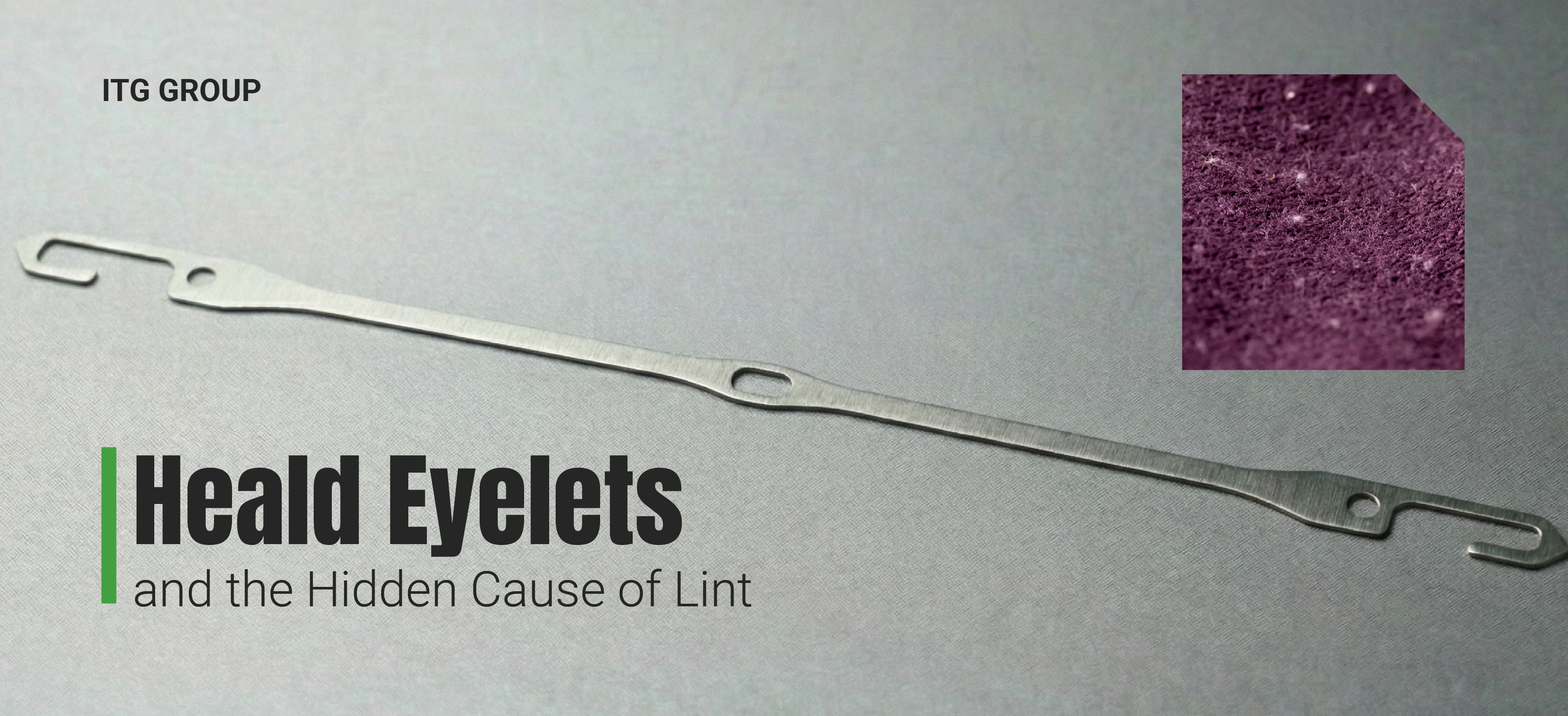
Every shedding cycle puts the warp yarn through the same point of contact: the heald eyelet. As the warp yarn bends at the eyelet during shedding, elongation occurs proportional to the square of the shed height — and because the front and back of the shed are asymmetrical in length, the yarn slips inside the eyelet, generating friction. When upper and lower yarns rise and fall alternately, severe friction occurs between them. During beating-up, the back-and-forth motion further increases friction between the warp yarn and the heddle eyelet.
This isn't an occasional event. It happens on every pick, on every heald, for the entire production run.
The cumulative cost of friction
The damage adds up in ways that show up directly on the production floor. Studies have found warp yarns lose up to 12% of their breaking tenacity due to abrasion and friction against fiber-to-fiber contact and all loom components — with peak friction occurring during weft insertion.
Lint is generated specifically at the points where warp yarns pass through drop wire eyes, heddle eyes, and between reed blades. This lint collects on the weaving machine surfaces and is often incorporated into the fabric when it falls into the shed or becomes entwined with warp or weft yarns, resulting in defective fabric. Thick lint buildup can also clog loom mechanisms and mix with lubricating oil.
The result is a chain of consequences mills know well: thin places, gouts, oily streaks, and broken ends — if the warp becomes too hairy, the reed forms a ball of fiber between the reed and heald shaft, and if small enough, that ball passes through and becomes a defect woven directly into the fabric.
Sizing helps — but it doesn't solve the problem at the source
Warp yarns are typically sized — coated with protective agents like starch or polyvinyl alcohol to improve abrasion resistance and reduce friction. This is a necessary step, but it addresses the yarn side of the equation. The eyelet itself — the physical surface the yarn contacts thousands of times per minute — is the other half of the equation, and it's often overlooked.
What eyelet geometry actually does
Heald design research is specific about which physical features reduce yarn damage at this contact point. Rounding the front and rear edges of the heald reduces stress on the yarn. A planar lateral surface at the eyelet — without sharp upper or lower corners — prevents the yarn from being forced onto edges where it could be wedged and damaged. This allows even thermally sensitive yarns to be processed at high operating speeds without damage from sharp edges or friction heat.
In other words: the smoother and more rounded the eyelet surface, the less mechanical stress the yarn absorbs on every single pass — which translates directly into less fiber shedding, less lint generation, and fewer downstream fabric defects.
Where ITG Group's healds and droppers fit?
ITG Group's healds and droppers are manufactured with this contact point as a quality priority. Made from 420J stainless steel — a grade selected for its superior hardness and corrosion resistance — the eyelet surface is smooth and abrasion-resistant, and components are processed through acid-washing, polishing, and electrolysis to further improve anti-rust performance and reduce surface friction at the point of yarn contact. This combination of material and finishing directly addresses the root causes of lint buildup: rough contact surfaces that break fibers rather than guide them.
The full ITG Group range covers closed and open type flat steel healds, steel wire healds with grooved mail-eye, drop wires (EO and EG types across multiple sizes), and specialty healds for linen weaving and jacquard looms — giving mills the ability to match eyelet type and finish to the specific yarn and fabric they're running.
For mills dealing with recurring lint-related defects or accelerated yarn wear, the heald and dropper eyelet is often the first place worth inspecting — not just the yarn.
If you'd like to review which heald and dropper specifications best match your current loom setup and yarn type, ITG Group's technical team can help.
Sources: Statista, Grand View Research, Femme Hub, Mordor Intelligence, Oxano.

- Indústria têxtil
- Mar 23, 2026
High-Performance Braiding for Marine Applications
The maritime and fishing sector is not a seasonal niche or a passing trend; it is a structural industry built on critical operational infrastructure. Mooring ropes, large-diameter hawsers, and industrial fishing nets sustain vessels, port operations, and aquaculture systems worldwide. This permanent dependency makes the segment a technical and commercial opportunity that goes far beyond traditional textile markets.
From a market perspective, the data confirms its relevance. The global fishing nets market was valued at approximately US $1.67 billion in 2024 and is projected to grow at a compound annual growth rate (CAGR) of around 4.6% through 2034, driven by the expansion of commercial aquaculture and the increasing adoption of high-performance synthetic nets. This figure reflects only the fishing net segment and does not include mooring ropes, industrial hawsers, and other maritime applications, indicating that the total market linked to marine braided products is significantly larger.
Beyond its size, the attractiveness of this industry lies in its structural demand. Nets degrade due to constant abrasion and prolonged exposure to saline environments. Mooring ropes lose strength over time because of mechanical fatigue. Vessels require continuous maintenance. This dynamic creates consistent replacement cycles and lower volatility compared to textile markets driven by discretionary consumption.
The economic opportunity is directly connected to technical capability. Not all braiding machines are designed to manufacture competitive maritime products. Producing hawsers and large-diameter ropes requires reinforced frames, stable transmission systems, and sufficient motor power to maintain uniform tension in structures that can exceed 80 mm in diameter. In addition, the number of spindles directly affects braid density, improving load distribution and abrasion resistance—critical factors when products must withstand high dynamic loads.
The sector has also evolved toward high-performance synthetic fibers such as high-tenacity polyester, industrial nylon, technical polypropylene, and ultra-high-modulus fibers. These materials are progressively replacing metallic solutions in certain applications due to their lower weight and superior corrosion resistance. However, they require precise tension control and mechanical stability during the braiding process to preserve their structural properties.
In this market, purchasing decisions are based on performance, durability, and operational safety. This reduces price-only competition and enables stronger margins compared to conventional textile applications. The combination of application value, technical entry barriers, and structural demand creates favorable conditions for solid returns when supported by the appropriate production capabilities.
Braiding machines designed specifically for rope, hawser, and industrial maritime applications make it possible to participate competitively in this segment. In this context, the specialized solutions available within the ITG Group portfolio respond directly to the technical demands of the maritime and fishing industry, integrating large-diameter capacity, high spindle density, and operational stability for high-performance applications.
- Indústria têxtil
- Feb 17, 2026
Selecting Heald Frames for High-Performance Weaving
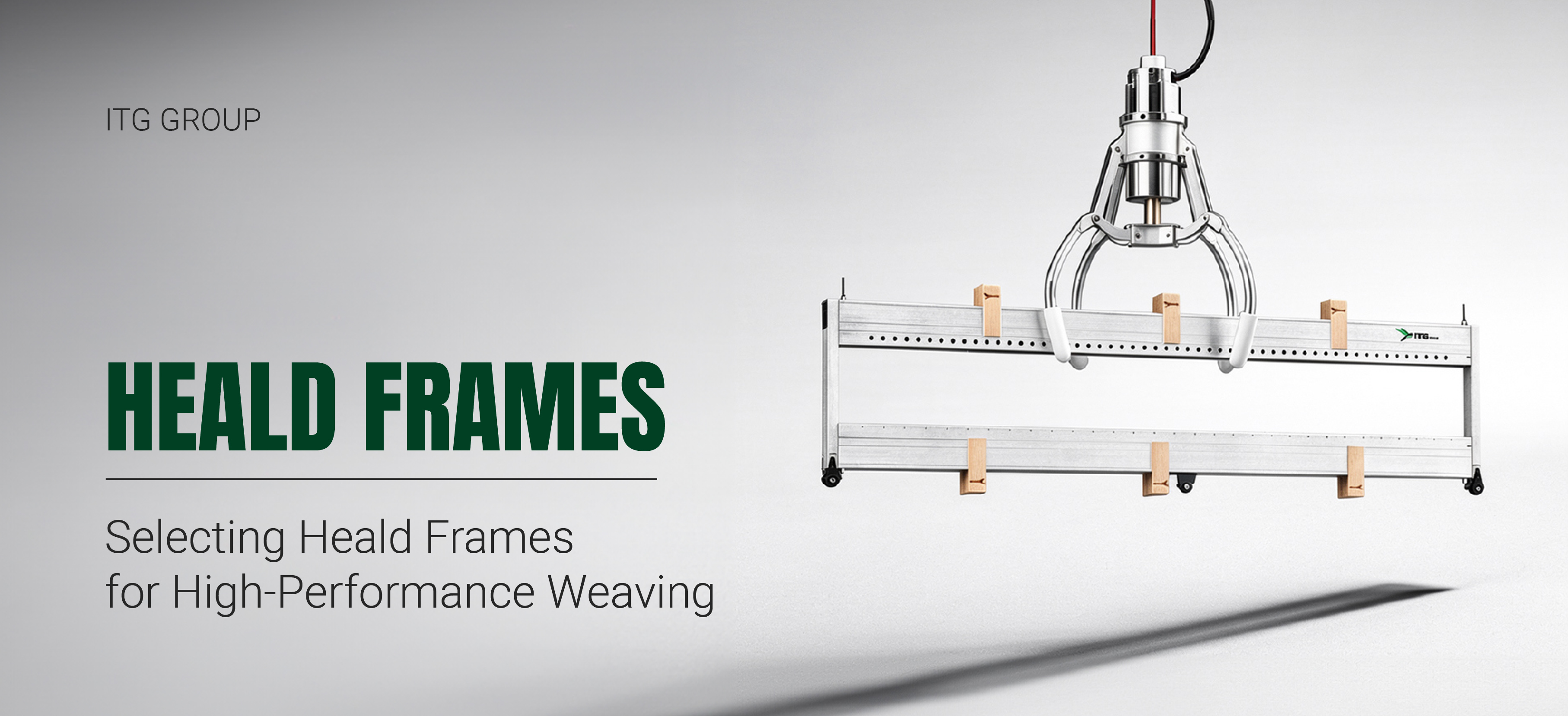
When investing in weaving equipment, heald frames are often underestimated. However, experienced textile professionals know that the performance, stability, and longevity of a loom depend heavily on the quality of its frames. Choosing the right heald frames is not just a technical decision — it is a strategic one that directly affects fabric quality, machine efficiency, and operating costs.
One of the first factors to consider is material quality. Heald frames must withstand continuous motion, tension, and vibration, especially in modern high-speed looms. Frames made from high-grade aluminum alloys or reinforced materials offer the best balance between strength and weight. A lighter frame reduces inertia, allowing smoother movement and higher operating speeds, while sufficient rigidity prevents deformation over time.
Another critical aspect is dimensional accuracy and structural stability. Poorly manufactured frames can warp or lose alignment, leading to uneven shed formation. This results in fabric defects, increased yarn breakage, and unnecessary stress on other loom components. Precision manufacturing and strict tolerances ensure consistent performance, even under demanding weaving conditions.
Surface finish and assembly quality also play an important role. Smooth surfaces reduce friction and wear, especially where frames interact with healds and droppers. High-quality welding, fastening, and joint design prevent loosening or micro-vibrations that can compromise fabric consistency and machine reliability over long production runs.
Compatibility is another key consideration. Heald frames must be engineered to match the specific loom type — whether rapier, air-jet, or projectile — as well as the operating speed, fabric style, and tension requirements of each application. Proper compatibility ensures stable motion, accurate shedding, and reduced mechanical stress, allowing the loom to operate efficiently without unnecessary vibration, adjustments, or premature wear. Frames that are correctly matched to the loom and fabric perform more reliably and support consistent production over long runs.
Maintenance and service life should not be overlooked. Frames designed with durability in mind reduce the frequency of replacements and maintenance interventions. Over time, this translates into lower operating costs, fewer unplanned stoppages, and more stable production schedules — all essential for competitive textile manufacturing.
The qualities outlined above — material strength, structural stability, dimensional precision, compatibility, and long-term durability — are exactly the principles behind the heald frames offered by ITG Group. Designed to perform in modern, high-speed weaving environments, ITG frames are compatible with leading loom brands such as Toyota, Tsudakoma, and Picanol, meeting the expectations of experienced textile producers. By prioritizing reliability, stability, and precise manufacturing, ITG Group’s heald frame solutions support consistent fabric quality and dependable production, day after day.
- Indústria têxtil
- Aug 13, 2025
What is traceability in the textile industry and why is it so important?
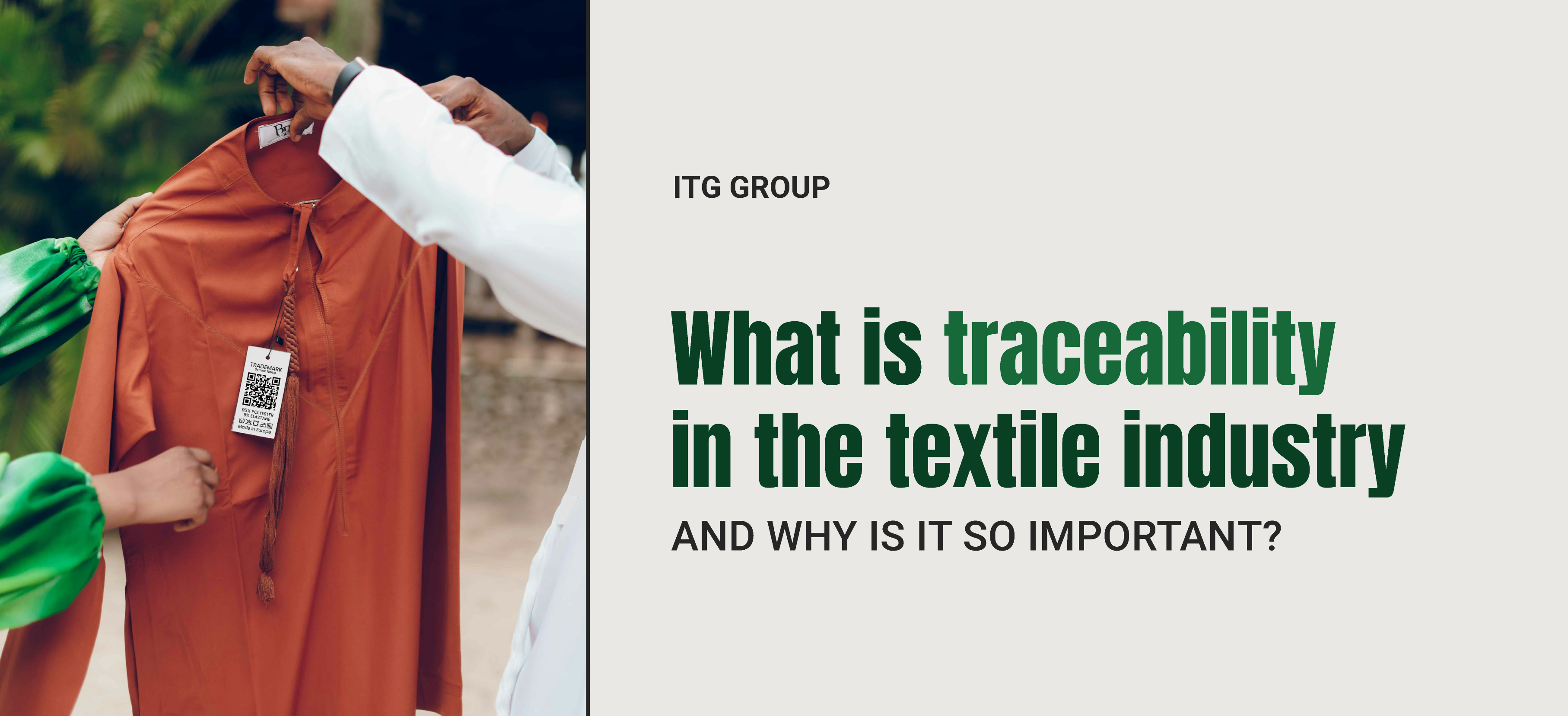
Textile traceability refers to the ability to track the journey of a garment or other product from its origin—the raw material—to its final destination: the consumer or recycling. This system documents each stage of the production process (such as spinning, weaving, dyeing, finishing, and distribution), allowing us to know how, when, and where it was manufactured, with what materials, and under what conditions.
The importance of traceability
Transparency and trust
In an era where consumers demand to know the origins and impact of what they buy, traceability offers security and credibility. When a brand can demonstrate that its products respect labor rights and environmental criteria, it generates trust and loyalty.
Social and environmental responsibility
Traceability ensures that good practices are followed throughout the chain, preventing labor exploitation and minimizing pollution. It also facilitates recycling, as knowing the materials used is essential for separating and reusing garments correctly.
Quality and safety
An effective system allows for the rapid detection and isolation of faults, such as dyeing defects or composition problems, improving quality control. It also helps to comply with strict regulations, such as REACH in the European Union.
Operational efficiency
Recording each batch and movement reduces errors, delays fewer processes, and optimizes the supply chain.
Steps to implement traceability in textiles
- Product or batch identification: assign unique codes such as RFID or QR codes from raw material to final product
- Process recording: document each stage of the process (dyeing, cutting, manufacturing), including date, location, and operator data.
- Use of technology: integrate blockchain for immutable records, IoT and RFID for real-time monitoring, and ERP software to consolidate data.
- Information exchange: ensure compatibility between systems to share data between suppliers, manufacturers, and distributors.
Faced with social, regulatory, and commercial pressure, large groups such as Kering, H&M, and LVMH have already implemented tools such as the blockchain-based AURA platform to track their products. Initiatives such as Fashion Revolution promote transparency in manufacturing, while campaigns such as Clean Clothes push for fair working conditions. Certifications (e.g., GOTS or Global Recycled Standard) have also gained relevance by supporting brands real commitment.
Traceability in the textile industry is much more than a documentary exercise: it represents transparency, environmental responsibility, safety, and efficiency. To become the norm, the use of technologies such as blockchain, IoT, RFID, and integrated management platforms, together with global standards and consumer pressure, is essential. Only then will truly ethical and sustainable fashion be achieved.
ITG Group recognizes that the products generated by its customers are distinguished by their quality, and therefore understands the importance of supporting that value with increasingly transparent processes. Traceability not only allows the origin and conditions under which a textile was produced to be demonstrated, but also strengthens confidence in its excellence. That is why ITG Group accompanies its customers on the path toward a more traceable, transparent industry that is prepared for the demands of todays consumers. We are your business partner in the textile industry.
Information obtained from:
https://www.vogue.mx/moda/articulo/trazabilidad-textil-que-es-y-como-funciona