
 Português
 Inglês
Welcome to Our Blog - ITG Group
Blog

- Indústria têxtil
- Oct 14, 2026
Nextech 2026: descobrindo para onde caminha a indústria têxtil
De 22 a 24 de setembro, participamos da primeira edição da Nextech by Colombiatex, na Plaza Mayor, em Medellín. Trata-se da primeira feira da América Latina especializada em maquinário e tecnologia para a cadeia têxtil-confeção. De acordo com a Inexmoda, a Colômbia representou 6,8% do mercado latino-americano de moda em 2025, cerca de US$ 8.494 milhões, e o setor está se perguntando como produzir melhor, e não apenas mais.
Em nosso estande, apresentamos teares circulares, trançadeiras e máquinas retilíneas da SINOTEX em funcionamento. Recebemos visitantes de diversas cidades da Colômbia e também do Equador, Peru, Argentina e Europa, e boa parte deles eram empresas com as quais ainda não trabalhávamos. Quase todas as conversas giraram em torno de quatro temas.
Sinal 1: o tecido circular continua sendo a base, mas crescer nem sempre significa comprar outra máquina
Foi o que mais nos perguntaram. Antes de adquirir uma nova máquina, verifique se é possível diversificar com a que você já possui:
Troque peças, não a máquina. Nos teares circulares de malha simples, ao trocar as peças do núcleo, a mesma máquina pode passar a tecer malha felpuda ou polo.
Mude a bitola com um cilindro novo. Você obtém um tipo diferente de tecido com o mesmo equipamento e um investimento muito menor do que o de uma máquina completa.
Escolha bem entre tubular e largura aberta. Se você trabalha com tecidos com lycra ou cores claras e a dobra do tubo deixa marcas, a largura aberta enrola o tecido estendido, evita esses vincos e mantém uma densidade de ponto uniforme. Se você produz peças sem costura lateral, o tubular continua sendo a opção mais eficiente.
Sinal 2: em golas e punhos, a diferença está no design
Cada técnica que você dominar é mais um produto que você pode oferecer: mini jacquard, pregas em relevo, intarsia, transferência ou golas moldadas. Se você estiver avaliando uma máquina retilínea, preste atenção nisso:
Rolos de subida e descida: o tecido sai reto sem precisar ser esticado manualmente.
Agulhas de calcanhar alto: as came se desgastam menos.
Motor com servocontrole: segundo o fabricante, aumenta a produção em 15%.
Quatro barras lançadoras e oito alimentadores: mais cores em um mesmo desenho.
Sinal 3: no trançado, a continuidade está nos detalhes
A trança é utilizada em cadarços para calçados, cordas esportivas e de segurança, linhas de pesca, cabos para fones de ouvido ou cordões para jacquard, em poliéster, náilon, PP ou dyneema. Se você está pensando em adquirir uma trançadeira:
Parte do produto final. O número de fusos e cabeçotes define o que você pode produzir e em que ritmo.
Procure por parada automática em caso de quebra de fio para não acumular metros com defeito. Segundo o fabricante, alguns modelos para cordas produzem entre 4 e 5 vezes mais do que uma trançadeira tradicional.
Mantenha os consumíveis à mão. Com bobinas, suportes, molas e pinos de freio à disposição, uma parada dura horas e não semanas.
Pense no acabamento. Se você produz cordões, uma máquina de pontilhamento automática de 4.000 a 6.000 pontos por hora finaliza o processo sem depender do trabalho manual.
Sinal 4: a sala de corte ganhou destaque na conversa
As máquinas de estendimento e corte automático de tecido, uma linha que incorporamos recentemente com a YINENG TECH, estiveram entre as mais consultadas. O tecido costuma representar entre 60% e 70% do custo de uma peça de roupa, e a Lectra estima que o desperdício nas salas de corte varie de 10% a 20%. É um dos maiores centros de custo de uma confecção e quase sempre o menos medido.
Antes de analisar qualquer ficha técnica, avalie estes quatro aspectos durante um mês normal: sua eficiência no traçado por tipo de peça, seus refugos e retrabalhos de acordo com a causa, as horas reais de uso da sua mesa de corte e sua verdadeira limitação (consistência, tempo de troca de referência ou volume). Além disso, avalie a estendida e o corte em conjunto. Uma cortadora automática apenas corta o tecido estendido que lhe é entregue. Se o tecido continuar sendo estendido manualmente, você automatizou a etapa precisa e deixou a imprecisa como estava.
Antes de decidir
Quem volta de uma feira traz várias opções em aberto. Estas quatro perguntas ajudam a organizá-las:
O que você vai produzir e para qual mercado?
Qual é a produtividade real com o seu fio e seus turnos?
Há peças de reposição disponíveis nas proximidades?
O que está incluído no suporte à instalação, colocação em operação e treinamento?
A maioria das decisões de investimento em maquinário é tomada meses após uma feira, quando há tempo para comparar com calma. Já observamos isso em outras divisões do grupo e, por isso, não consideramos nenhuma conversa encerrada. Se você nos deixou uma solicitação, nossa equipe comercial entrará em contato para dar continuidade ao assunto. E se você não teve tempo de nos visitar ou deseja revisar algum desses temas para sua fábrica, entre em contato conosco.
Agradecemos a cada pessoa que passou por aqui durante a Nextech.
- Technical
- Sep 08, 2026
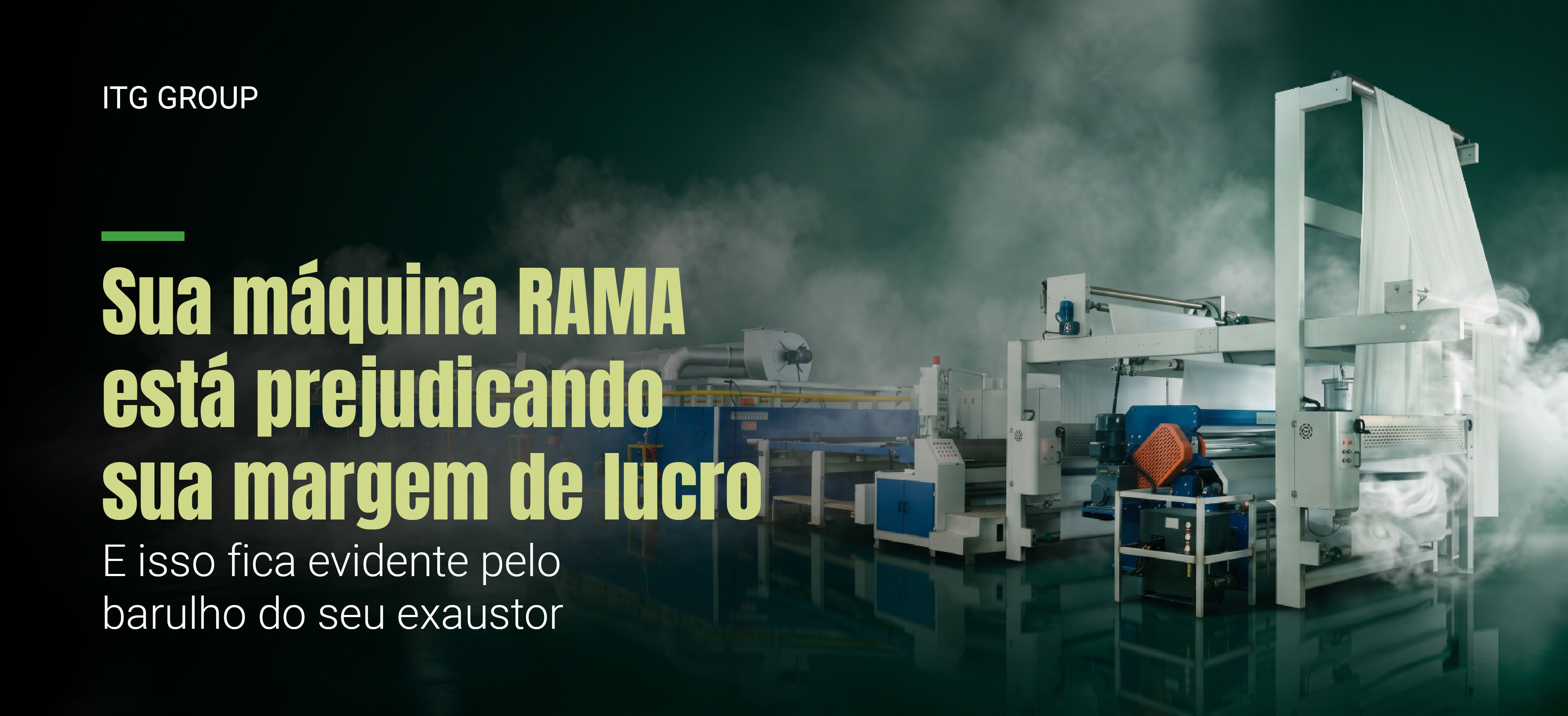
Sua máquina RAMA está prejudicando sua margem de lucro, e isso fica evidente pelo barulho do seu exaustor
Se você opera uma linha de acabamento, já sabe qual seria a primeira máquina a verificar se a conta de energia disparasse: a RAMA.
Costuma ser o maior consumidor individual de energia térmica do chão de fábrica, e a razão é física pura — você está passando tecido úmido por câmaras de ar quente em circulação, e gerar esse calor, câmara após câmara, turno após turno, é caro. A literatura é direta a respeito: a RAMA é descrita como uma das máquinas que mais consomem energia térmica em todo o processo têxtil, e o acabamento, junto com a preparação de processos a úmido, responde por cerca de 35% da energia térmica de uma fábrica integrada.
Aqui está a parte que não aparece em nenhum indicador: boa parte dessa energia nunca toca o seu tecido. Ela sai pela chaminé de exaustão como ar quente, irradia para dentro da fábrica, ou é desperdiçada mantendo uma temperatura que o processo não precisava. Não é uma falha dramática. É um vazamento silencioso e contínuo — e é pago em cada metro de tecido que você produz.
Este artigo detalha onde uma RAMA convencional perde energia, e como o design da nossa máquina RAMA XY-D-2600 ataca cada perda na origem.
Onde uma RAMA convencional perde energia
Três perdas concentram a maior parte do desperdício, e elas se acumulam.
Ar de exaustão quente, jogado fora. Uma RAMA expele continuamente ar úmido e quente para manter a atmosfera da câmara adequada para a secagem. Em uma configuração convencional, essa exaustão —que carrega energia térmica real que você já pagou para gerar— sobe direto pela chaminé. A pesquisa sobre os fluxos de energia em RAMAs identifica o gás de exaustão como um dos maiores gargalos para a eficiência, e os estudos sobre recuperação de calor residual em RAMAs demonstraram reduções de consumo de combustível superiores a 60% quando esse calor de exaustão é captado e reutilizado corretamente. Cada grau nesse ar expelido é dinheiro gasto uma vez e perdido.
Vazamento térmico e radiação. O calor não fica educadamente dentro das câmaras. Ele escapa pelas paredes dos painéis, pelas frestas e pelas superfícies mal isoladas — por isso a área ao redor de uma RAMA mais antiga costuma estar desconfortavelmente quente. Esse calor irradiado custa em dobro: é energia que saiu do processo, e eleva a temperatura da fábrica, que a sua ventilação depois tem que combater.
Temperatura e fluxo de ar que você não consegue controlar com precisão. Quando você não consegue regular as condições de forma independente ao longo da máquina —em cima versus embaixo, seção por seção— você compensa exagerando. Trabalha mais quente ou empurra mais ar do que o tecido estritamente precisa, só para manter a qualidade. Essa margem de segurança é um seguro real de qualidade do tecido, mas também é sobreconsumo contínuo. E as condições atmosféricas pioram isso: estudos de modelagem energética mostram que o desempenho de uma RAMA pode variar até 10% da energia total necessária apenas pelas mudanças sazonais na temperatura e na umidade do ar ambiente.
Como a XY-D-2600 ataca cada perda
A máquina RAMA XY-D-2600 é uma RAMA de camada dupla construída especificamente em torno do consumo de energia. Três características de design correspondem diretamente às três perdas acima.
1. Forno de camada dupla — reutilizar o calor em vez de regenerá-lo. Esta é a ideia central. O forno é empilhado em duas camadas, e o calor gerado na primeira camada de termofixação é transferido para a segunda camada através de uma placa de ferro fechada. Em vez de cada câmara gerar seu próprio calor do zero, a segunda camada funciona em parte com o calor que a primeira já produziu. De acordo com o catálogo, essa recuperação equivale a uma economia de energia de cerca de 20% a 40%, dependendo do processo. E como as camadas são empilhadas, cada gabinete tem 1600 mm de altura — você obtém essa economia sem dobrar a sua área de piso.
2. Recuperação de calor residual — pré-aquecer o ar fresco com o ar que você ia expelir. O segundo ataque é sobre essa chaminé de exaustão. Uma RAMA precisa repor constantemente ar fresco no forno. Na XY-D-2600, esse ar fresco que entra passa primeiro pelo dispositivo de recuperação de calor residual — assim ele é pré-aquecido pela exaustão que sai antes de entrar na câmara. Você está recuperando energia do mesmo ar que estava prestes a jogar fora. O catálogo situa isso em uma economia de energia de aproximadamente 10% a 30%. Os ventiladores de exaustão e de suprimento são ambos controlados por frequência, e o sistema relata um ganho de eficiência de produção de 2% a 3% na mesma linha, dependendo das condições do processo. O isolamento reforça isso: os painéis são de placa galvanizada com 150 mm de material isolante de alta qualidade para conter o vazamento de calor descrito antes.
3. Duto de ar duplo independente — precisão em vez de excesso. A terceira característica resolve o problema do sobreconsumo. A XY-D-2600 usa dois dutos de ar independentes, com o volume de ar superior e inferior controlado separadamente e ajustável a qualquer proporção pelo menu, regulado por conversores de frequência. Isso significa que você para de compensar com um excesso generalizado e passa a ajustar o fluxo de ar ao que o tecido realmente precisa, em cima e embaixo. E algo crítico: isso se mantém mesmo em baixa velocidade — que é exatamente onde vivem os tecidos sensíveis. O catálogo especifica resultados de tecido estáveis em qualquer velocidade para malha, tecido revestido, tecido reciclado, fibra ultrafina, pelúcia e seda. Um fluxo de ar mais baixo e preciso sobre artigos delicados é ao mesmo tempo uma economia de energia e uma salvaguarda de qualidade.
O que isso significa na conta — e no tecido
Os percentuais de economia acima não são arredondamentos de marketing — são números de catálogo ligados a condições de processo, e se acumulam sobre a máquina que já é a sua maior linha de energia. Quando o seu maior consumidor térmico funciona de 20% a 40% mais eficiente no forno e recupera outros 10% a 30% da exaustão, isso não é um erro de arredondamento na conta de energia. É uma mudança estrutural no seu custo por metro — do tipo que se acumula a cada turno, a cada dia, por toda a vida da máquina.
O trabalho independente da indústria aponta na mesma direção: os projetos de recuperação de calor residual em RAMAs relataram economias de 20% a 30% em eletricidade e combustível, e a modernização de RAMAs em geral é creditada com cortes no consumo específico de energia de 10% a 25%. Não vamos lhe dar um número de ROI — isso depende do seu preço de energia, da sua mistura de tecidos e das suas horas de operação, e quem lhe cotar um retorno universal está adivinhando. Mas a direção não está em dúvida, e os dados para calcular o seu estão todos aqui.
E o lado da qualidade importa igual, porque uma eficiência energética que lhe custa qualidade de tecido não é eficiência. As mesmas características que economizam energia —fluxo de ar preciso por duto duplo, ar fresco aquecido introduzido para evitar grandes diferenciais de temperatura e gotejamento, condições estáveis em baixa velocidade— são as que protegem o toque e a consistência do acabamento em tecidos sensíveis. Em uma RAMA, bem feita, a decisão de energia e a decisão de qualidade são a mesma decisão.
Onde entra a ITG Group
A ITG Group fornece a RAMA de camada dupla XY-D-2600, e o nosso papel não termina na ordem de compra. Dimensionar uma RAMA para a sua linha —número de câmaras, largura de trabalho, fonte de calor, os tecidos que você realmente produz— é uma conversa técnica, não uma escolha de catálogo. Se a sua RAMA atual está trabalhando quente, expelindo calor para dentro da fábrica, ou obrigando você a exagerar na temperatura para manter a qualidade, esses são os sintomas que vale a pena avaliar.
Conte-nos o que você está acabando e em que condições opera, e a nossa equipe técnica vai analisar a configuração com você — incluindo uma leitura honesta sobre se os números justificam a mudança para a sua operação específica.
Fale com a gente: info@group-itg.com
- Technical
- Aug 03, 2026
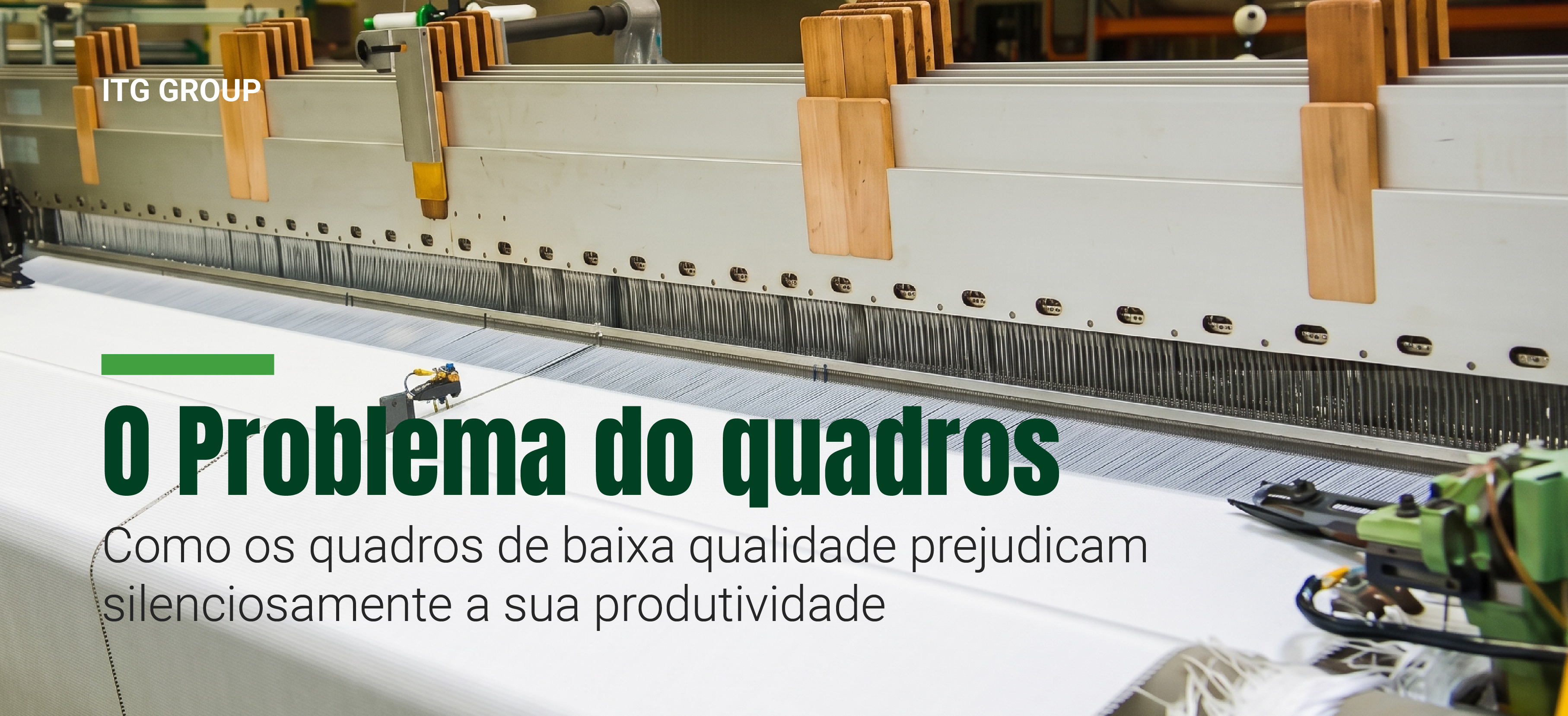
Como os quadros de baixa qualidade prejudicam silenciosamente a sua produtividade
Pergunte a qualquer gerente de produção o que para os seus teares e vai ouvir falar de qualidade do fio, umidade, idade das máquinas. O que raramente mencionam é o componente que realiza milhões de ciclos de movimento bem no centro de tudo: o quadro.
É um ponto cego — porque os números mostram que os quadros merecem muito mais atenção do que recebem.
Um estudo de paradas em uma fábrica de teares a ar constatou que 58% de todas as paradas foram causadas por rupturas de urdume — a maior categoria por larga margem, à frente das rupturas de trama (34%) e de todo o resto combinado (8%). E aqui está o detalhe que importa para este artigo: o local onde o urdume se rompe determina quanto tempo o tear fica parado. Uma ruptura próxima ao pente se conserta com um nó rápido. Uma ruptura na zona dos quadros e lamelas leva significativamente mais tempo — o tecelão precisa identificar o fio de liço afetado, repassar o fio e reiniciar.
O mesmo conjunto de pesquisas situa o reparo médio de uma ruptura de urdume em cerca de 2,87 minutos. Parece pouco — até multiplicar por cada tear, cada turno, cada dia. Uma fábrica com dezenas de teares e uma taxa elevada de rupturas de urdume está perdendo horas inteiras de produção diariamente, uma parada “pequena” de cada vez.
O quadro suporta milhões de ciclos de movimento em alta velocidade, interagindo constantemente com os fios de liço e suportando a tensão do urdume. A pesquisa sobre o design de quadros o identifica como um dos componentes do tear mais responsáveis pela vibração e pelo ruído — e a vibração é justamente o que limita o desempenho em alta velocidade.
Quando um quadro é mal construído ou está desgastado, a reação em cadeia é assim:
1. O excesso de vibração transfere tensão aos fios de urdume em cada ciclo de abertura da cala.
2. Os fios tensionados se rompem com mais frequência — alimentando essa categoria de 58% das paradas.
3. Quadros desgastados ou desalinhados obrigam as fábricas a reduzir a velocidade do tear apenas para continuar produzindo.
4. Quadros que não resistem se desgastam mais rápido, dobrando a frequência de substituição — e dobrando o tempo de inatividade que cada troca exige.
A análise de componentes de tecelagem na indústria é direta sobre isso: um quadro de baixa qualidade ou desgastado não apenas reduz a velocidade de tecelagem — causa rupturas do fio de urdume, gera defeitos na superfície do tecido e aumenta os custos de manutenção simultaneamente.
Cada parada não planejada acarreta três custos ao mesmo tempo: produção perdida, mão de obra ociosa e risco de qualidade. Este último é o mais subestimado — as paradas do tear não apenas interrompem a produção, deixam marcas de reinicialização e diferenças na absorção de corante tecidas diretamente no tecido como defeitos visíveis. A parada termina; o defeito é despachado.
Os padrões da indústria apontam para menos de 10% de tempo de inatividade total para uma produção de tecelagem eficiente. Uma fábrica cujos quadros estão silenciosamente inflando sua taxa de rupturas de urdume pode ultrapassar esse limite sem que uma única falha “importante” apareça no registro de manutenção.
Quando uma fábrica audita seu tempo de inatividade, o quadro raramente tem uma linha própria — as paradas são atribuídas a “rupturas de urdume” e a análise termina aí. Mas se as rupturas de urdume são a sua principal categoria de paradas, os componentes que tocam esses fios milhares de vezes por minuto merecem ser o seu primeiro ponto de inspeção, não o último.
Um quadro não é um artigo qualquer. Em velocidade de produção, é a diferença entre um tear que roda e um tear que para.
Na ITG Group, nossos quadros de liço para teares a ar de alta velocidade são projetados exatamente para isso: durabilidade, custos de manutenção reduzidos e desempenho estável até 1000 RPM, compatíveis com teares Picanol, Toyota e Tsudakoma. Se as paradas recorrentes estão consumindo suas horas de produção, nossa equipe técnica pode ajudar você a avaliar se os seus quadros são parte do problema.
Fontes: Austin Journal of Textile Engineering (estudo de paradas em teares); pesquisa sobre design de quadros e vibração (estudos de quadros de material compósito); análise de seleção de componentes VieTextile; benchmarks de tempo de inatividade da Textile School.
- Indústria têxtil
- Jul 14, 2026
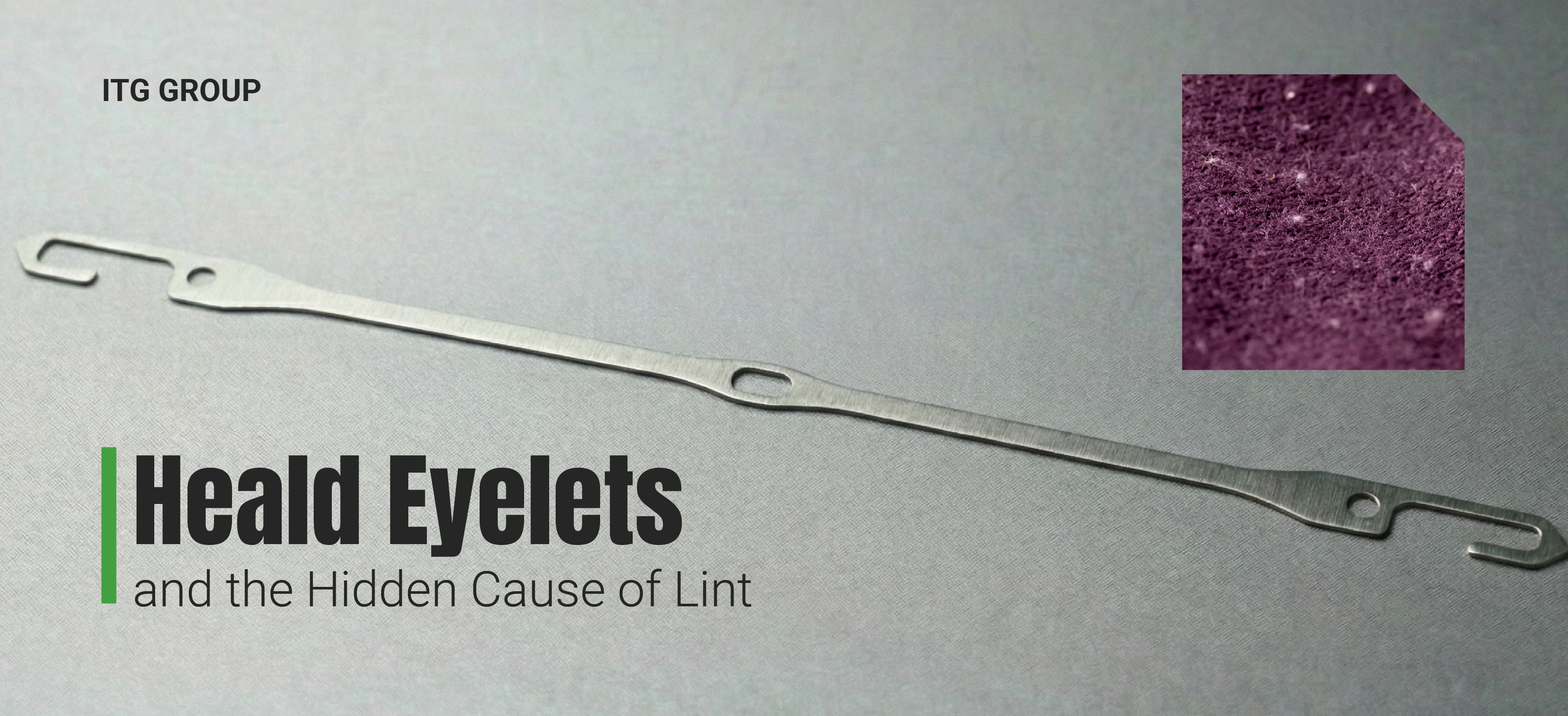
Heald Eyelets and the Hidden Cause of Lint
Every shedding cycle puts the warp yarn through the same point of contact: the heald eyelet. As the warp yarn bends at the eyelet during shedding, elongation occurs proportional to the square of the shed height — and because the front and back of the shed are asymmetrical in length, the yarn slips inside the eyelet, generating friction. When upper and lower yarns rise and fall alternately, severe friction occurs between them. During beating-up, the back-and-forth motion further increases friction between the warp yarn and the heddle eyelet.
This isn't an occasional event. It happens on every pick, on every heald, for the entire production run.
The cumulative cost of friction
The damage adds up in ways that show up directly on the production floor. Studies have found warp yarns lose up to 12% of their breaking tenacity due to abrasion and friction against fiber-to-fiber contact and all loom components — with peak friction occurring during weft insertion.
Lint is generated specifically at the points where warp yarns pass through drop wire eyes, heddle eyes, and between reed blades. This lint collects on the weaving machine surfaces and is often incorporated into the fabric when it falls into the shed or becomes entwined with warp or weft yarns, resulting in defective fabric. Thick lint buildup can also clog loom mechanisms and mix with lubricating oil.
The result is a chain of consequences mills know well: thin places, gouts, oily streaks, and broken ends — if the warp becomes too hairy, the reed forms a ball of fiber between the reed and heald shaft, and if small enough, that ball passes through and becomes a defect woven directly into the fabric.
Sizing helps — but it doesn't solve the problem at the source
Warp yarns are typically sized — coated with protective agents like starch or polyvinyl alcohol to improve abrasion resistance and reduce friction. This is a necessary step, but it addresses the yarn side of the equation. The eyelet itself — the physical surface the yarn contacts thousands of times per minute — is the other half of the equation, and it's often overlooked.
What eyelet geometry actually does
Heald design research is specific about which physical features reduce yarn damage at this contact point. Rounding the front and rear edges of the heald reduces stress on the yarn. A planar lateral surface at the eyelet — without sharp upper or lower corners — prevents the yarn from being forced onto edges where it could be wedged and damaged. This allows even thermally sensitive yarns to be processed at high operating speeds without damage from sharp edges or friction heat.
In other words: the smoother and more rounded the eyelet surface, the less mechanical stress the yarn absorbs on every single pass — which translates directly into less fiber shedding, less lint generation, and fewer downstream fabric defects.
Where ITG Group's healds and droppers fit?
ITG Group's healds and droppers are manufactured with this contact point as a quality priority. Made from 420J stainless steel — a grade selected for its superior hardness and corrosion resistance — the eyelet surface is smooth and abrasion-resistant, and components are processed through acid-washing, polishing, and electrolysis to further improve anti-rust performance and reduce surface friction at the point of yarn contact. This combination of material and finishing directly addresses the root causes of lint buildup: rough contact surfaces that break fibers rather than guide them.
The full ITG Group range covers closed and open type flat steel healds, steel wire healds with grooved mail-eye, drop wires (EO and EG types across multiple sizes), and specialty healds for linen weaving and jacquard looms — giving mills the ability to match eyelet type and finish to the specific yarn and fabric they're running.
For mills dealing with recurring lint-related defects or accelerated yarn wear, the heald and dropper eyelet is often the first place worth inspecting — not just the yarn.
If you'd like to review which heald and dropper specifications best match your current loom setup and yarn type, ITG Group's technical team can help.
Sources: Statista, Grand View Research, Femme Hub, Mordor Intelligence, Oxano.